
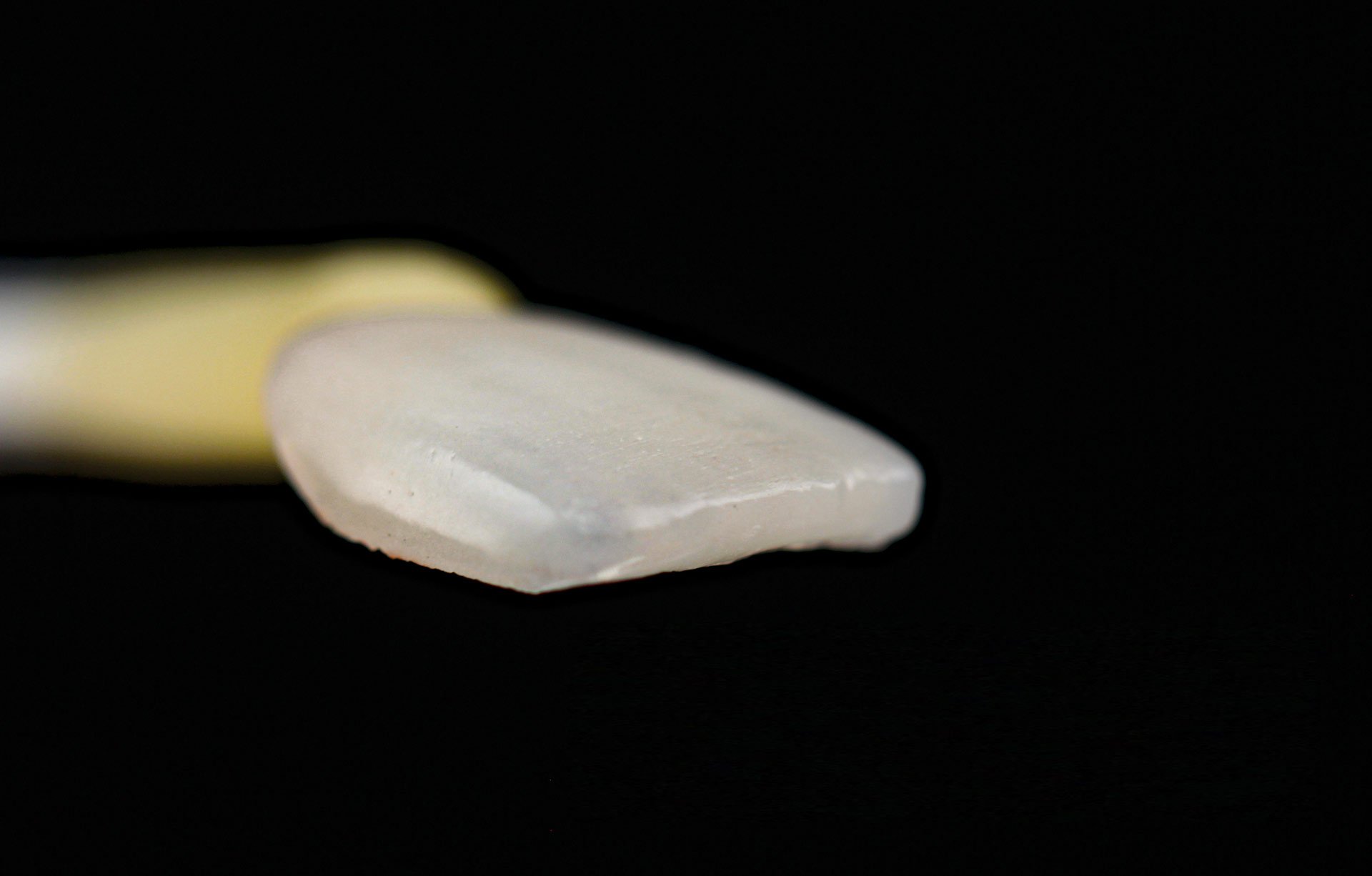
The Lifespan of Veneers
Composite veneers usually need more maintenance and may need repair or replacement sooner. However, there is no fixed expiration date because veneer lifespan depends on the material, the health of the natural tooth, the quality of the bond, your bite, daily habits, and oral care.
That distinction is important when considering cosmetic dentistry. A veneer can be made from a strong material and still fail early if it is placed on an unhealthy tooth or exposed to excessive grinding forces. In contrast, a carefully planned veneer bonded to healthy enamel and protected from excess pressure can remain attractive and functional for many years.
How Long Do Porcelain Veneers Really Last?
Porcelain veneers commonly last about 10 to 15 years, but research shows that many continue to perform well beyond that range. A systematic review of 25 studies involving 6,500 porcelain laminate veneers estimated a survival rate of about 95.5 percent at 10 years. Fracture was the most common reason for failure, followed by loss of bonding.
Those numbers show why porcelain veneers are considered a predictable long term cosmetic treatment when they are used in the right situation. They do not mean every veneer will last exactly 10 years, nor should a veneer automatically be replaced when it reaches a certain age.
A 15 year old veneer that still looks natural, fits correctly, and protects a healthy tooth may continue to function without a problem. On the other hand, a much newer veneer could need attention if it chips, becomes loose, or develops decay around the natural tooth.
Instead of thinking about veneers as having an expiration date, it is more useful to understand the factors that determine how well they age.
What Helps Veneers Last Longer?
Healthy enamel gives porcelain a strong surface for bonding. Research has shown that veneers tend to do well when most of the bonding surface stays in enamel instead of extending deep into dentin, the softer layer underneath.
A small amount of enamel may need to be removed so the veneer fits well and does not look bulky. Careful preparation helps preserve more natural tooth structure while still giving the veneer a strong base.
Healthy teeth and gums also matter. A veneer cannot get a cavity, but the tooth around and underneath it still can. Decay and gum disease should be treated before cosmetic work begins.
Why Your Bite Matters
Veneers are not separate from the rest of your mouth. Each time you bite or chew, force moves through the teeth, and that force should be shared in a stable way.
If one tooth hits too hard, the veneer on that tooth may take more pressure than it should. Over time, that can lead to chips, cracks, loosening, or pain when biting. This is one reason the bite should be checked before and after veneer treatment.
At Aesthetic Smile Designs, cosmetic planning considers both appearance and function. A smile should look natural, but it should also feel comfortable when you chew and move your jaw.
Can Teeth Grinding Damage Veneers?
Yes. Grinding and clenching can place strong pressure on veneers and natural teeth. Some people grind during sleep and do not know it until a dentist sees worn edges, small cracks, sore jaw muscles, or broken dental work.
Grinding does not always rule out veneers, but it should be evaluated before treatment. Covering worn teeth does not remove the force that caused the wear.
Some patients may need an oral appliance after treatment to help protect the teeth during sleep. The right plan depends on the bite, the amount of wear, and how much grinding or clenching is present.
Porcelain vs Composite Veneers
Porcelain and composite can both improve a smile, but they do not age in the same way. Porcelain is more resistant to stains and wear, so it often lasts longer and keeps its polish for more years.
Composite resin can be easier to repair and may require less tooth preparation in some cases. However, it is more likely to stain, lose its shine, or chip over time, which means it may need more upkeep.
The right choice depends on more than lifespan. Your dentist should also consider tooth health, bite forces, the amount of natural tooth that can be saved, and the type of change you want.
How Can You Make Veneers Last Longer?
The same habits that protect natural teeth also help protect veneers. Good oral hygiene, regular dental care, and avoiding unnecessary stress can make a meaningful difference over time.
Brush twice each day with fluoride toothpaste and clean between the teeth daily. Keep regular dental visits so the dentist can monitor the gums, veneer edges, natural teeth, and bite.
Avoid chewing ice and other very hard objects. Do not use your teeth to open packages or bottles. If you play sports, wear a properly fitted mouthguard.
Patients who grind or clench should also discuss the problem with their dentist. An oral appliance may be recommended in some cases to help protect the teeth and restorations during sleep.
Finally, pay attention to changes. If one veneer begins to feel different when you bite, becomes sensitive, feels loose, or develops a rough edge, have it checked rather than waiting for the problem to grow.
Can a Broken Veneer Be Repaired?
Sometimes. Small chips in composite can often be repaired, while larger porcelain breaks may require a new veneer.
The tooth under the veneer should also be checked. If the damage came from a bite problem, clenching, or grinding, that cause should be addressed before the repair is finished.
Are Veneers Worth It If They Eventually Need Replacement?
For the right patient, veneers can provide a long lasting and dramatic improvement in a smile. The fact that they may eventually need maintenance does not make them a poor treatment.
Natural teeth also change over time. Fillings, crowns, bonding, and other dental treatments may eventually need repair or replacement as well.
The important question is whether veneers are the most appropriate treatment for the problem being corrected. Some patients may benefit from porcelain veneers, while others may achieve excellent results with composite veneers, whitening, bonding, orthodontics, or another approach.
A comprehensive smile makeover should begin by determining what each tooth actually needs rather than assuming every cosmetic concern requires the same treatment.
The Lifespan of Your Veneers Starts With the Treatment Plan
So, how long do veneers last? Porcelain veneers commonly provide 10 to 15 years of service, and many can last considerably longer. Research showing survival rates above 95 percent at 10 years demonstrates how predictable this treatment can be when it is used appropriately.
Longevity, however, is not determined by porcelain alone. Healthy enamel, careful bonding, good oral hygiene, controlled grinding, and a stable bite can all influence how well veneers age.
That is why cosmetic dentistry should begin with more than choosing a tooth shape and shade. At Aesthetic Smile Designs, treatment planning considers how the teeth, bite, jaw, and cosmetic goals work together before recommending veneers.
The objective is not simply to create a smile that looks beautiful the day treatment is completed. A well planned smile should look natural, feel comfortable, preserve healthy tooth structure, and be designed with the years ahead in mind.
BERNIE B. VILLADIEGO
Conservative Dentistry
Treatment Plan
If you are considering porcelain veneers, a complete cosmetic and functional evaluation can help determine whether they are the right choice for your smile.


