
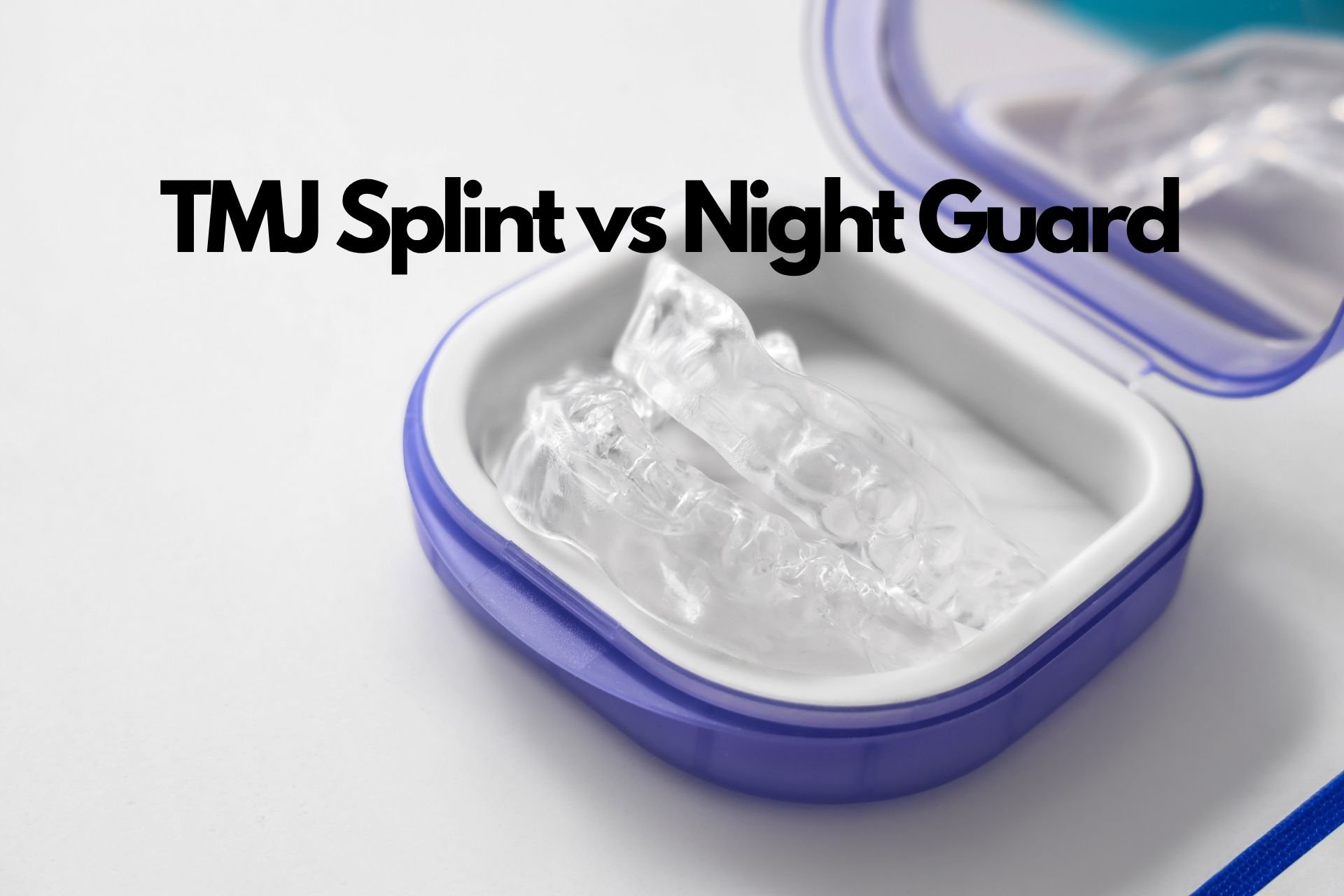
TMJ Splint vs Night Guard
If you are comparing a TMJ splint vs night guard, the main difference is the goal of the device. A night guard helps protect teeth from grinding and clenching. A TMJ splint is chosen and adjusted as part of care for a jaw disorder when the dentist thinks an oral device may help.
What Is the Difference?
The names can be confusing. Dentists do not always use them the same way. The name alone does not tell you what the device is for. A better question is simple: What problem are you trying to solve? Tooth wear from grinding may need protection. Jaw pain, painful popping and clicking, locking, headaches, or limited movement may call for a full TMJ evaluation before any device is chosen.
What Is a Night Guard?
A night guard fits over the upper or lower teeth. People often wear it during sleep. Its main job is to protect teeth from grinding and clenching. It adds a layer so the teeth do not rub directly. That protection helps when grinding has worn enamel, chipped teeth, broken dental work, or made teeth sore. It may also protect crowns, bonding, and other work from repeated force. Still, a night guard does not explain why the jaw hurts. Some people grind without a TMJ disorder. Others have jaw pain even with little tooth wear. The device should match the problem.
What Is a TMJ Splint?
A TMJ splint is a removable mouth device used as part of non-surgical care for some jaw disorders. It may also be called a stabilization splint, occlusal splint, bite splint, orthotic, or stabilization appliance. A TMJ splint is often made after the dentist checks the joints, muscles, jaw movement, symptoms, and bite. The device is then adjusted so the teeth meet in a planned way. There are many splint types, so they do not all work the same way. Some give the jaw a steady bite surface. Others have a different short-term goal.
TMJ Splint vs Night Guard: The Main Difference
The biggest difference is purpose. A night guard focuses on tooth protection from grinding. A TMJ splint is used with a specific goal for the jaw, muscles, or function. splint is used with a specific goal for the jaw, muscles, or function. Follow-up can also be different. A TMJ splint may need careful checks and changes as symptoms shift. A simple protective guard may need less change once the fit and contacts are stable.
When Is a Night Guard Usually Used?
A night guard makes sense when grinding is the main problem and the goal is tooth protection. Signs can include flat tooth surfaces, cracked enamel, broken fillings, sore teeth in the morning, or known grinding during sleep.
A well-fit guard can cut direct wear between the upper and lower teeth. But it does not always stop clenching or grinding. It mainly protects the teeth from damage those forces can cause.
If jaw pain, locking, painful clicking, or limited movement are also present, tooth protection may not be enough. Those signs call for a broader TMJ check before you assume a standard night guard is the right choice.
When Is a TMJ Splint Considered?
A TMJ splint may be considered when a dentist finds a jaw disorder and thinks a removable device may help as part of non-surgical care.
Symptoms may include jaw joint pain, sore chewing muscles, stiffness, painful clicking, locking, limited movement, facial pain, or some headaches linked with TMD. The splint should follow the diagnosis, not replace it.
A full exam may include your symptom history, jaw movement, muscle tenderness, joint sounds, tooth wear, and bite contacts. Some patients may also need imaging. The goal is to understand the problem before choosing a device.
Can a Night Guard Help TMJ Pain?
Sometimes. The answer depends on the diagnosis and the device design. A night guard can help some people with jaw pain by creating a more balanced contact surface across the bite. That does not mean night guards are a universal solution for all jaw discomfort; rather, achieving the best results depends on matching the right device and treatment goals to the individual patient.
Can a Night Guard Make TMJ Worse?
It can if the device fits poorly, creates uneven contacts, or is not right for the problem.
New symptoms should not be ignored. More jaw soreness, a bite that feels different, worse headaches, or more joint pain can mean the device needs adjustment. It can also mean, a night guard is not the right device.
This is one reason to be careful with a store-bought guard when TMJ symptoms are already present. A home-molded device cannot be checked and adjusted in the same way as a custom device that is monitored by a dentist.
Can a Night Guard Change Your Bite?
A device used for non-surgical TMJ care should not be made to cause a lasting bite change. Patients should ensure that any recommended oral device is not intended to permanently alter the teeth or bite.
Problems can happen when a device fits poorly, covers only some teeth, or is worn in a way that lets teeth move. Certain splint designs can also affect tooth position and bite contacts.
If your teeth no longer fit together the same way after wearing a guard or splint, call the dentist who made it. A lasting bite change should be checked, not ignored.
Why A Custom Fit Device Matters
A custom device lets the dentist control the fit, tooth coverage, material, and contact points. Those details matter even more when a person already has jaw pain or other TMD symptoms. Follow-up matters too because symptoms and muscle tension can change. The device can be worn as well. A splint may need adjustments so the contacts stay stable as treatment goes on. At Aesthetic Smile Designs, T Scan digital bite analysis can measure the timing and relative force of tooth contacts. Dr. Bernie Villadiego can use that information during the exam and when checking an occlusal splint.
How Does T Scan Help With a TMJ Splint?
Traditional bite paper can show where teeth touch. It does not measure when each contact happens or how force is spread across the bite.
T Scan uses a thin digital sensor to record the bite as the teeth come together. The data can show whether one area touches early or carries more pressure than another.
At Aesthetic Smile Designs, T Scan is used for bite analysis and splint calibration. It does not diagnose TMD by itself, but it can add useful data when Dr. Villadiego checks how the teeth contact the device.
How Do You Know Which Device You Need?
Start with the problem. If you have worn teeth and confirmed grinding but little or no jaw pain, a protective night guard may be enough.
If you have lasting jaw pain, locking, painful clicking, limited opening, facial pain, headaches, or a bite that feels unstable, a TMJ evaluation is a better first step.
Some people have both bruxism and TMD. In that case, the dentist may need to protect the teeth while also looking at the jaw joints and muscles.
Do not choose a device because it looks comfortable or because the package says it is for TMJ. Two clear devices can look almost the same while having very different contact patterns and goals.
TMJ Splint vs Night Guard: Choose the Device for the Problem
When comparing a TMJ splint vs night guard, do not assume every clear oral device works the same way. A night guard often protects teeth from grinding, while a TMJ splint may be chosen for a specific jaw, muscle, or function goal.


